TGIF!! to all our loyal readers. We are happy to unveil our new presentation and cool new features.
Why we changed our site presentation?
As you can see we have changed our site layout design. The motivation behind this is to provide better readability and user friendly interface. Also, we picked this design after exhaustively researching usability of several hundred designs. As our site and community grows, we would like to provide many more exciting features and this site is better suited for that.
What is new ?
1. Registration: Readers can now register by simply clicking the register link under Meta. This is particularly useful for users who would like to contribute articles, ideas and tools on a regular basis
2. Search: We don’t need to explain that to the googler’s of the world do we ?
3. Entries RSS and widgets to embed in your site: You can now subsribe to this site via a host of reader services such as google reader, news gator, netvibes etc.
You can also embed entries on this site as a widget on your personal site or social network page!!. Just click on entries rss for this.
4. Monthly Archives: Access prior month posts quickly and easily with the archives organized by month. You can get to the archives using either the left navigation panel and the right navigation panel
Measuring patient satisfaction and using surveys is getting increasingly popular in US healthcare. If you work for a hospital, physician practice or even a private clinic, you would have become familiar with some form of the patient satisfaction survey or another. If you are not then look online and chances are you are already being rated, ranked, scored and reported by someone online. Late last year America’s largest health benefits company(Well Point), engaged Zagat Survey to develop a new online survey tool. Even, Google is supposedly working on an online rating app.
Making sense out of surveys
But how do you balance these scoring systems , with more meaningful assessments of care quality and competence? Patient safety guru Bob Watcher, who coined the term ‘hospitalist’ says that a balanced approach is more important than a single peephole. What he means by this is that, it’s important to look at a number of different factors(such as hospitalization rates, acuity etc) while determining patient satisfaction. We will save the discusssion on what such a survey might look like for another day.For now, let us focus on how to choose and use existing internal and external patient satisfaction systems. Let us do that by asking a hypothetical question ….
“How would Toyota manage patient satisfaction ?”
Toyota management realizes the importance of accessing the “Voice of the Customer” . Its organizational structure has a customer relations department that handles customer satisfaction (i.e., patient surveys in our case) and customer relations (i.e., employee training and incentives, patient assistance center, and dispute resolution).
If you aren’t listening to your patients, you can’t have all the business attributes that provide them good care and value. However, if you aren’t using this information to create change, then don’t bother listening
Toyota might establish a customer survey system that measures patient satisfaction with the process of care, the delivery experience, the service experience, and clinical quality. Based on the results of these surveys, they would develop your strategic plans to improve customer service.
Deparment/Service line Reporting- Summary evaluations and specific, but anonymous, customer comments would be shared with the departments. Departments/specialities would now monitor their own progress, which puts less pressure on the measures
Elminitate inter department competition- Gaming occurs in nearly every system when two departments scores are compared. We all know how Inpatient units and Emergency departments often game the survey system to show inflated scores in hospitals. So Toyota would establish acceptable levels of performance and eliminate making distinctions of performance above that level.
Telephone Surveys- Telephone surveys would be conducted to determine initial satisfaction with the care process. Standards for conducting the phone survey and processing the data would also been established.
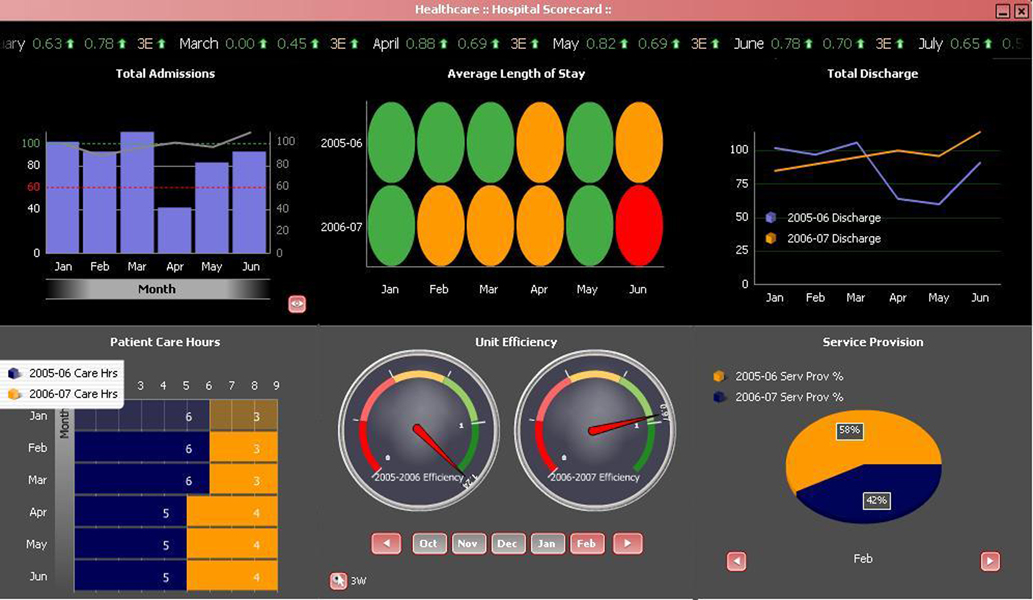
There are many areas in a hospital that need dashboards to be able to identify and resolve problems. Let us look at an example. In many ways, a bed management or bed control function in the hospital is like an Air Traffic Control. They they control the take off (discharges) and landings (admissions). In hospital terms they control the patient flow from several areas such as emergency and surgery to Inpatient units. But, there is one major difference between an air traffic controller and a hospital bed manager. While the former has ‘real time’ information and visual indicators to make decisions, the latter relies on numerous phone calls,faxes and experience to make their bed decisions. Naturally, the decisions are delayed or sub optimized (like when patients are shifted to a higher level of care even when there is not need for it). The result is bottlenecks and delays throughout the system. Which in turn increases ‘patient days’ and negatively impacts clinical and financial outcomes.
Visual view of data
Hospitals in the US, tend to collect terrabytes of data annually. But the data is not useful in and of itself. Because, it remains inactionable unless its visually processed and represented in the form of a meaningful dasboard with bells and whistles built in. Reverting back to our example, if we do not have a handle on our daily/hourly admissions, length of stay and patient care hours and other key performance indicators, it is virtually impossible to reduce delays and length of stay for patients.
So what should a hospital dashboard look like. We did some research and found a great example. One of the best designs we found from our research was iDashboards . So check it out below !!!
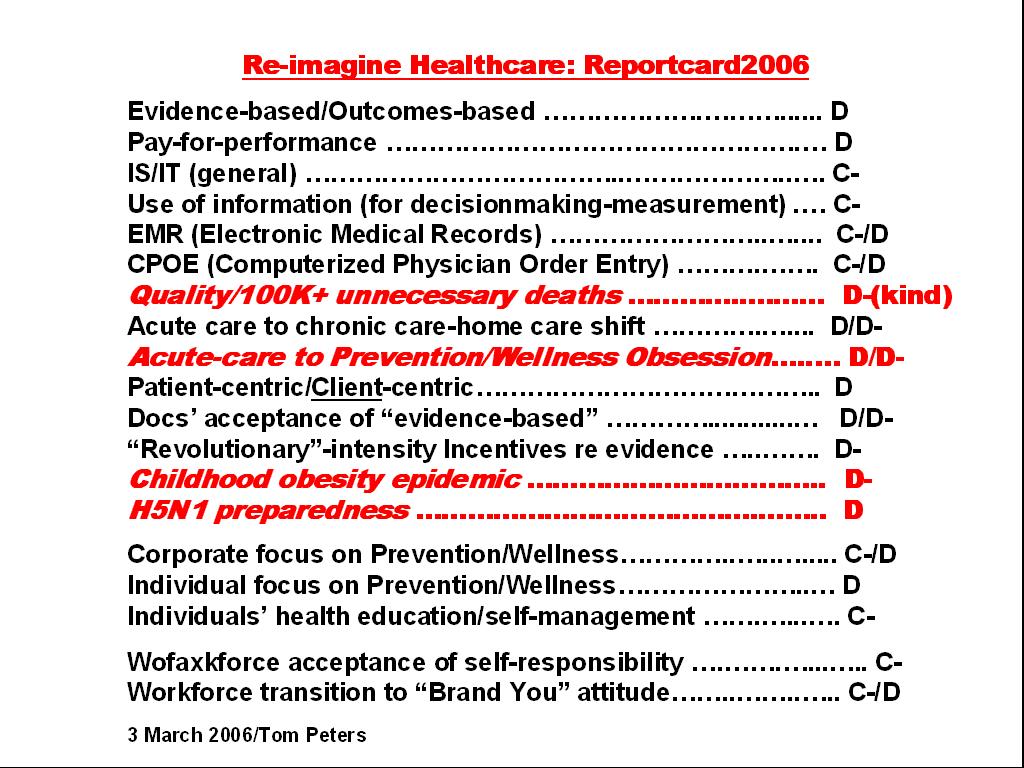
What we cannot measure, we cannot manage. That is a proven adage, so have you ever wondered what healthcare report card will look like ? Or for that matter, if it is even possible to create such a report card and yet keep it simple?
In Healthcare we usually collect a lot of data related to different aspects of the business. Everything from clinical quality to outcomes and patient satisfaction is measured. On average any hospital in the US tracks over 100 indicators every year to gain insight into their practice, patient preferences and overall business. So creating a common report card that would work for even a handful of hospitals can become a tedious task.
Healthcare Report Card
Managment guru Tom Peters has created a healthcare report card to measure the state of US healthcare. He grades the overall system on 19 metrics or parameters. The beauty of this report card lies in it’s simplicity. The metrics have been chosen very carefully and the grading system is straight out of an elementary school test. The idea is to create a performance picture that is easy to understand and interpret.
5s is a methodology developed in the toyota production system from which lean thinking derived. The 5s system is perhaps the most easily applicable and adaptable tool of lean in healthcare setting. It’s also a tool that can deliver real results impacting both quality of care and the bottomline quite dramatically. If you are not convinced yet, let us consider this…
Benefits of 5s
If we had applied 5s to all of america’s Inpatient units in 2005, and reduced just 5 minutes from a patient’s length of stay. that would amount to approximately 135,985 days of care reduced. I am not going to venture a guess on the amount of lives saved . But it would be easier to do the math on the financials and if you are so inclined you will see a obscene amount of dollar savings.
When done well, it can deliver even better results. Let us examine the methodology and then we will look at the ‘done well’ part.
The 5s method has 5 steps to implement
Sort (Seiri): This refers to the sorting through all the charts, supplies, equipment and meds etc., in the work area and keeping only essential items. Everything else is stored or discarded. This leads to fewer hazards and less clutter to interfere with productive work.
Straighten (Seiton): Focuses on the need for an orderly workstation. Charts,Forms and other equipment must be systematically arranged for the easiest and most efficient access. There must be a place for everything, and everything must be in its place.
Shine (Seiso): Indicates the need to keep the workplace clean as well as neat. This is a daily activity. At the end of each shift, the work area should be cleaned up and everything is restored to its place.
Standardize (Seiketsu): Allows for control and consistency. Basic housekeeping standards apply everywhere in the facility. Everyone knows exactly what his or her responsibilities are. House keeping duties are part of regular work routines.
Sustain (Shitsuke): Refers to maintaining standards and keeping the area safe and efficient order day after day, year after year
Where to start?
Start looking at your most busy areas and just take pictures, you will be amazed at the amount of clutter you find around you. Specifically take a look at your Nurse’s station, Physician work areas, Operating rooms, Triage, Registration and Patient bedsides. Start a 5s program today and reap it’s rich benefits.
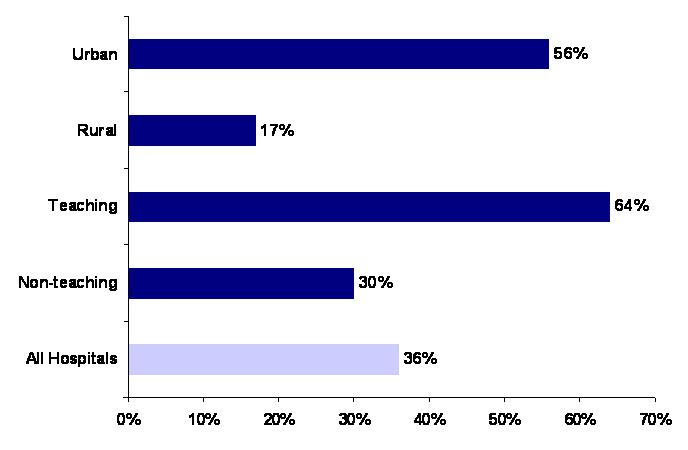
With over 65% of America’s Emergency Departments reporting capacity issues, diverting ambulances has become common place. “To divert or not to divert?” is the questions often facing managers and administrators. Let us examine some quick facts.
According to the AHA in 2007, over 56% of Urban hospitals reported diversions in 2007 (above)
Lack of staffed Critical care beds was cited as the number one reason for ambulance diversion
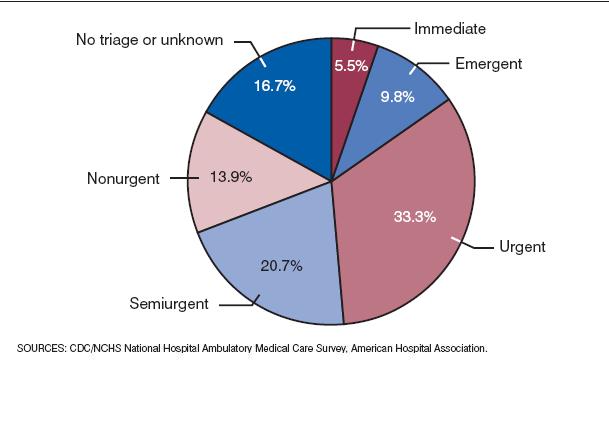
On average, approx. 15.5% patients arrive via ambulance
Is zero diversions possible?
With about 34 ambulances being sent to EDs around the US every minute, most administrators, even state and county officials have settled into status quo in most places. But there are some well documented and concerted efforts being made by a few EDs. Which brings us to the question, Is it really possible to have Zero diversions. The answer is a resounding Yes!!!. And this has been proven by Seattle’s best (no not the coffee company) . A policy has been passed in King County, WA to enforece zero diversions in Seattle area Emergency departments. The policy requires critically ill patients to be taken to the ‘hospital of their choice’ or the nearest hospital.
Facts from Seattle’s Zero Diversion policy
Hospital administrators agreed that throughput is a hospital problem not an ED problem
Setting guidelines and on pre-diversion targets is the key to reducing diversions
If a hospital is overloaded they can go on “ED saturation” two hours at a time and then get back to green and can only do this for a total of six hours in every 24
Rearranging staff for low and high acuity has helps tremendously
Reconfiguring the alert system is critical when changes are implemented
The goal of medication reconciliation is to provide correct medications to the patient at all transition points within the hospital and at discharge. At every transition point, a nurse must review previous medication orders with new orders to reconcile differences to help eliminate medication errors. Poor communication of a patient’s medical information at transition points results in medication errors and adverse drug events.
JCAHO Requirements
According to the JCAHO National patient safety goals, accurately and completely reconciling medications across the continuum of care is an important patienty safety goal. It is important to recognize that sound system design is intrinsic to the delivery of safe, high quality health care, the goals generally focus on system-wide solutions, wherever possible.
Med Rec Form
Using a standardized medication reconciliation form, the nurse can completely reconcile medications and obtain other information that can improve patient safety. Consequently, the physician will have an organized document with current information at hand to reconcile. The nurse can them compare the list against the physician’s admission, transfer, and/or discharge orders. this form was created to obtain an accurate list of all medications (prescriptions, over-the-counter, supplements, herbals, etc.) taken by the patient at home prior to out-patient or in-patient admission. This includes the drug name, dosage, frequency and route.
Download!!- You can download this form from the clinical toolkitpage.
In my previous article on Critical care or Intensive care(The link betweek efficiency and patient safety), we saw how efficiency can impact patient safety and thereby the outcome. Now let us examine a recent innovation in the area of critical care that has actually accomplished this at the John’s Hopkins Hospital, Baltimore,MD.
The Problem
Poor and inconsistent communication among providers in the intensive care unit (ICU) can lead to a lack of understanding of daily goals and the failure to deliver needed services that accelerate recovery and discharge.
ICU patients tend to have life-threatening problems and complex care needs that require a combination of many treatments and services in order to achieve timely recovery and discharge.
Lack of communication among providers can lead to a lack of understanding about what needs to occur each day in the ICU.
The net result is that patients remain in the ICU longer than necessary, and are at greater risk of harm, including morbidities and mortality.
The Solution
The ICU care team (which includes the attending physician and/or fellow, anesthesia and surgery residents, a nurse practitioner, a nurse, and a pharmacist) visits each ICU patient every day between 20 and 25 minutes and uses the ICU Daily Goals Form to document the This creates a standardized way to communicate with one another and a focussed plan of care.
Expected Benefits
The benefit of this innovation may be greatest with high-intensity patients, such as those in the ICU. It also may be most applicable in academic medical centers and other organizations where ICU care is provided by many different types of practitioners.
Reduced LOS – At Johns Hopkins where this innovation was pioneered, the mean length of stay in the ICU reduced from 2.2 days to 1.1 days
According to the American Academy of family Physicians, there are 5.6 million cases of Community-acquired pneumonia annually in the US. The cost of treatment and care for CAP is an estimated $8.4 billion. The type of management and treatment of CAP and outcomes can significantly influence the cost of care and outcomes for hospitals.
Streamlining the workflow
University of Kentucky Medical Center(featured in the video) clearly shows how hospitals can save significant amount of time, costs and improve patient care by analyzing workflows.
Streamlining the drug preparation and administration process for CAP
By studying the process(time taken to process one order of an IV antibiotic ad mixture) they have observed that it takes approximately 16:42 minutesto prepare and administer the (Nursing + Pharmacy time). So from an efficiency standpoint it makes sense reduce or completely eliminate steps involved in drug preparation and have fewer administrations.
Efficient method of drug administration
Choosing monotherapy instead of combination therapy reduces the number of steps.Using agents with longer half-lives allows for once-daily administration, which in turn leads to improved compliance and outcomes and decreased costs. In addition, transitioning patients to oral therapy as soon as they are clinically stable can significantly reduce the length of hospitalization-the major contributing factor to health care costs.
University of Kentucky Medical Center applied this and reduced the time to prepare and administer Pre-mix doses of Monotherapy to 3:26 minutes