Archive for the ‘ EHR ’ Category

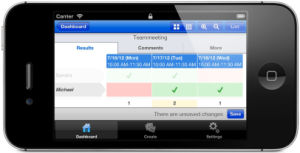
In a previous post we talked about electronic health records, and how hospitals and providers are embracing it to improve patient safety. With the introduction of the new iPhone3G, electronic health records are now going beyond the computer and into the iPhones. Hand held devices are always popular with physicians (tablet pcs and pdas). Now, consumers and providers can access health records on their phones.

Some current applications available at the online apple store

Medfile - Developed by Kaplan design lets users create and manage their personal medical records. Information such as blood type, allergies and emergency contact etc can be stored and retrieved.

ADAM - An application that lets the users identify health symptoms.From a simple sprain to fever, and upset stomact, ADAM gives users access to up-to-date medical information that is expert-reviewed. The tool also provides information on what the symptoms mean and when to seek professional medical attention.

These applications are fairly new, and are surely going to generate debate amongst medical professionals within and outside the blogosphere. Also, it remains to be seen, how popular these applications get with consumers.

We at HealthCare Management will keep a tab on this. So keep watching this space.

Introducing Smart Patient Rooms

Smart Rooms at UPMC

Star Trek at Bedside

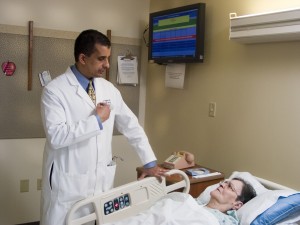
Imagine a hospital room, which recognizes doctors and nurses as they enter. Their name flashes on a flat panel screen for the patient and family to see. At the same time, a second monitor, shows the clinician exactly what they need to know at that moment to care for the patient. Information displayed includes: medication due, patient’s vital signs, and allergies. Does this sound like futuristic technology too good to be true? Well, it is not.

The smart room idea has already been developed and tested at the University of Pittsburgh Medical Center(UPMC). They have been testing this since early October at their Shadyside campus. The idea for the Smart Room came about two years ago when a UPMC nurse wearing latex gloves unknowingly went to place an IV in a patient with a latex allergy, causing an allergic reaction

Effective Technology

According to the UPMC , the system uses ultrasound tracking to identify the clinicians that might come to advance the care process for a patient. Each worker is assigned a unique tag—smaller than a pager—that emits ultrasonic sound waves, when the person wearing the tag first enters the Smart Room. The ultrasound detector in the room reads the tag and identifies the caregiver by name and job title, displaying the information on a flat-screen monitor at the foot of the patient’s bed. When a caregiver leaves the room, the information disappears from the screen. In this pilot phase, tags have been assigned to doctors, nurses, nursing assistants, phlebotomists and dietary hosts and hostesses.

Benefits

The biggest benefit of this innovation is in helping improve patient safety. Patient identification is a key factor in the care process and numerous errors can result from not verifying patient id. Smart rooms can help minimize that. In addition medication errors can be greatly reduced. Less obvious benefits can include, improving workflow and minimizing redundancy. The amount of time wasted in communication between care givers to gather information can also be impacted with this system.

**Picture courtesy UPMC media kit

Increasingly, healthcare organizations are investing in clinical information systems. According Kalorama Information – the publishing division of MarketResearch.com, hospitals in the United States would be spending close to $4.8 billion on Electronic health record(EHR) or Electronic medical record systems(EMR). Despite the brouhaha, there is a lack of understanding of what an EHR can do and can not do.In this post, we will attempt to peal the layers.

What is an EHR/EMR?  Simply put, the EHR  is an electronic record of a patient’s medical history. This electronic record includes important information like test and imaging results, medication history, Emergency department visit summaries, doctors’ notes and general health history – from childhood allergies to surgeries.

All of this exisits currently, (in most hospitals).But, in paper charts and in some cases in databases behind applications that do not talk to each other . For Instance, the Emergency department diagnosis, might reside in EMSTAT(a popular ED application) , while the same patient’s Inpatient treatment notes resides in another application such as Affinity. 

An EHR ultimately replaces the paper chart currently used to store the same information. The electronic version of the record can be made available to the patient’s caregivers in different locations, more quickly and efficiently. And when done well, it minimizes data redundancy (the need to enter the same information over and over) . So for instance, information captured during an emergency visit can be retrieved by an inpatient care giver, if the patient goes on to recieve care as an inpatient. 

How does EHR help hospitals ?

The EHR can help hospitals and health systems make improvements in three major areas.

1. Improved quality of medical decision making

It provides doctors with immediate access to a patient’s health information.Whether it is an Emergency Physicain, or a nurse that needs to phone an on-call physician in the middle of the night, the patient’s chart can be accessed to support important treatment decisions. In addition, in most cases the EHR is connected to a robust library of medical information that can help physicians in making diagnoses and treatment plans based on the latest research.In some cases, it can generate automatic reminders by mail or e-mail to notify test result availbility, critical values and other useful medical information.

2. Improved Patient Safety

Because doctors’ orders and prescriptions are entered into a computer rather than in handwritten orders, pharmacists and other caregivers have no trouble interpreting the information. This greatly reduces the possibility of transcription errors and other medical mistakes. Thereby reducing adverse drug events and increasing patient safety.

3. Improved efficiency

Caregivers will no longer need to search or wait for your patient chart. In addition, lab results and X-rays can be sent electronically to your doctors as soon as they are completed, for immediate analysis, diagnosis and treatment.

In addition to the major areas listed above, there are other advantages including cost savings from an EHR implementation.  In a recent article that  Houston Neal, (Director, Business Development, SoftwareAdvice.com) shared with us, they talk about how EMR can help reduce medical malpractice insurance premiums, reduced downcoding and even revenue gains by participating in pay for performance time programs (Medicare Care Management Performance (MCMP) ).